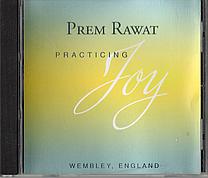
 Prem Rawat: Practicing Joy 2005-07-17
A person might reasonably ask who is this person, this Prem Rawat of whom no-one has ever heard and why is someone interviewing him? Why are there CDROMs published with some short interviews of him on them which are being freely distributed for free? The short answer is that this person, Prem Rawat, wishes you to know information about him, supplied by him, for his own benefit. He wishes to impress you, he wishes to convince you he has astonishing wisdom and power. How is he able to afford to do this? Well, before he called himself Prem Rawat, he was known as Guru Maharaj Ji the teenage guru and Lord of the Universe who made a controversial splash in England and the USA in the early 1970s. After a wild ride in the 1970s he altered his tactics and after the 1980s and the 1990s as 'Maharaji' he now wishes to become famous as an internationally respected Peace activist under his given name.
He can attempt to do this as his long term followers/cult members still revere him (secretly worship him) and support him financially and are always ready to fill a hall with an appreciative audience to applaud him and make him seem to be bona fidè. It's just a tad suspicious though.
- "in your position" and what exactly is that position? "I know so many things have been said about me" and how about all the things he's said about Himself? I am greater than God," "I am God,", no really, I am God "I am the Lord of the Universe." What didn't I say about myself?
Prem Rawat: Practicing Joy 17th July 2005 CD05V1PRW
MC: I want to say it's a pleasure talking with you. Inevitably, a person in your position will be described or defined by many people. How would you describe yourself?
I'm me. I'm just me. I know so many things have been said about me, and so many of those things that have been said about me have either come from people's own emotions, good or bad, however they felt. You know, I was doing this when I was very young, and I had to go to school as well. And to me, I had to start making that distinction right there and then. Maybe people tried to look at me certain ways. I never look at myself like that. I'm a human being. I'm proud to be a human being. I'm very happy that I'm a human being. I'm very happy that I have this life. And in a funny way, I'm also happy that I can feel joy and pain like everyone else. If I was anything else, how could I talk to those people that I talk to? What voice would I have? How would I say, you know, what I'm about to tell you is something really wonderful.
It has helped me, and it can help you. That, to me, is a fundamental thing. I mean, sometimes, you know, people are not proud to be alive, and people are not proud to be human. I am. To be human, to be who we are, whoever we are, regardless of our color, regardless of our height, regardless of our weight, regardless of what country we were born in, what we look like. We take pride in many other things, and sometimes we take pride in the very fundamental things that we have been given. A gift is only a gift when it is received as a gift. If it is going to be analyzed and if it's going to be rejected, it will never be a gift, even though it is. And that would be a tragedy. So, for me, I'm very happy being me. People would love to put labels on me. Are you a guru? Are you a teacher? You know, when I go to bed at night, I get tired, just like everyone else, close my eyes, and go to sleep. And that's wonderful.
MC: Good. What solution or help or hope do you bring, or does the message bring to people, generally?
I think that wherever people are, if they are shown that the road ahead is a wonderful road, it doesn't matter where they are. Either they are in a tragic situation, or they're very happy. And if hope is brought into their lives, you know, hope is one of those things. We need to be in dire straits to feel hope. Hope can be on a perfectly beautiful, sunny, clear day when everything is going just right and perfect. You can still use hope. To be able to be content within is the most hopeful message there is. To find that one thing that the heart has searched for for so long is a very hopeful message. And that's the message I bring. And that brings people hope. And that is what is important for all of us. That hope, that idea of self-fulfillment, that idea of being able to have Knowledge in one's life. In a way, stand on our own feet and make our own decisions of, yes, taking the responsibility for this breath, taking the responsibility for enjoying every single breath. It's an effort. I could tell you that that effort is sometimes more challenging and greater than climbing Mount Everest or trying to find the lowest point on the ocean floor or the furthest point in outer space because it's here, it's now, it's accessible, and it's a challenge, and it's wonderful. There are many people who purport to offer a message of hope and inspiration, and perhaps many do.
MC: What is it that you offer that is different?
Well, it is not just a question of message but actual experience through Knowledge to get in touch with that place. So it isn't just to come along and say, look, everything is wonderful, everything is great, but a way to be able to appreciate every breath, a way to be able to... I'm not just talking about thirst. I'm talking about a way of actually fulfilling that thirst once the thirst has been discovered. So what I'm saying is, not only am I going to talk about the thirst, I'm going to talk about water too, and I'll give you the water if you feel thirsty enough. Knowledge is what I give to people, and that is what is remarkably different about my message. It is not just words There is something more. There is an experience to be had, a feeling to be had within each human being, and I offer that as well. Can you describe this experience in ways that a person who's not had it could understand it? Well, it's just like thirst. It's just like thirst. It's just like fulfilling of the thirst. Sometimes all you can say is, ah, and that's it. Everything I'll say about it is using these words, beautiful, incredible, but something you have to feel for yourself. It's a feeling. It's definitely a feeling, and a feeling that you have to feel for yourself. I could say that it is like a dream of a thousand nights that is fulfilled, but at the same time, that doesn't mean anything because unless you've felt it, you know what I'm talking about. What motivates you to do this? Why are you spreading this message? I have a gift. I have been given a gift. I enjoy it. Because I enjoy it, I know it's a gift, and I have the ability. I can do it, and I do it.
MC: When did you realize you had this gift?
I've had this gift since I was very young. I used to speak before my father would come out and start speaking. Many times my father asked me to get up and speak, and he would look at me speak, and he would get very, very happy. And I have seen pictures, and, you know, pictures going so far back I even remember it, but I've seen pictures of where I'm standing there speaking, and he's there smiling, and that gift has been there. That gift has been there for a long time. How has it changed over the time that you discovered this and you are delivering it today? I think the gift has changed. I think I have changed. Older, of course, more experience, but I can tell you that when I go on the stage and I speak to people, or whether it is speaking to people individually, it is the same feeling. The feeling has not changed.
MC: So what qualifies you to be this messenger, to deliver this?
What qualifies me? The heart, the people. They're the ones. If what I'm saying, if I'm able to deliver, then I'm qualified to deliver. If I can't, I wasn't. Speaking about the world and peace, when you go from country to country, region to region, I imagine you're able to see these differences amongst individuals. How do they respond differently to your message? How does a Malaysian versus an Indian versus a Japanese versus an Italian or a Dutch person or a Venezuelan respond differently at all, or their expectation may be different? This is a very interesting phenomenon here because I do not speak to their culture. I speak to their heart. And my message comes from my heart to their heart, and there is no difference. This is what's amazing. Whether it's any country in Africa, whether it's Japan, whether it's Taiwan, whether it's Australia, whether it's India, whether it's Nepal or Sri Lanka, where the cultures are so different, and yet people receive my message the same way. The message sounds almost deceptively simple when one hears it in words. I wonder if you feel that words somehow are inadequate to convey this because we have to use them to communicate to one another, from one human to another.
MC: Do you feel that frustration at all?
I do. I do. I definitely do.
And how do you overcome it?
Well, all I can do is keep it simple. Keep it as simple as I can because it is simple. It really, really, really, really, really is simple. And I say to people again and again, look, feel this for yourself. If you like it, fine. If you like it, walk from it. even give it a second thought. But if you're going to make a commitment, make it because you want it to make it. make it for me. Make it for yourself. Learn. Grow. Life is simple. At the end of the day, life is incredibly simple. At the end of the day, every day is simple. And in fact, at the beginning of every day, every day is simple. What has become so complicated is that we have started to accept the complicated. That's what makes it so complicated. We're not sitting there going, wait a minute, I like this complicated stuff. I want it simple. When things are very, very complicated, we feel that we're needed.
We have some part to play. When things are really simple, we feel, well, gee, I didn't do anything, but you're alive. And how simple is that? How simple is to be alive? How simple is it to be able to laugh from your heart? Is it really a complicated process for a little child to smile? Is it really complicated for a little boy to look up and laugh just because he or she felt like it? That's how simple it is. And yet, how do you describe? You know, to a person who's going through a tragedy, and they're sitting there, and they're crying, and laughter is as far away from them as they can possibly imagine, how do you explain to them what laughter is like? Maybe you feel like you shouldn't even mention the word laughter because they're going through so much sorrow and pain. And yet, somewhere deep inside of them, there is laughter too. And given some time, it will come. So life is simple, and Self-Knowledge is simple, and enjoying is simple. All these things are really simple. Now, people would like to have it very complicated because then we could all sit there and argue whether this is true or not. But that's not how life is. You can't sit there and say, well, are you alive or are you not? Are you alive or are you not? No, you are. And that just needs to be accepted. That needs to be understood because it is very simple.
MC: What would you say, if you boil down the basics of Knowledge, what would you say was the main aspects?
Well, the techniques themselves are just a part of the process. Because to me, when you come and you approach the whole idea of Knowledge, you start to acknowledge that within you there is something that is beautiful, that peace is within you, that the joy that you're looking for is within you. And you acknowledge that. And it's not just like, okay, I think so. But really start to get in touch with that. And it's something to understand about you. You as a being on the face of this earth. That all this is not just out of context. It's not just a big accident that you are here. And it means something that you are here. Not somebody else that, you know, we look at our heroes, and we look at our leaders, and we look at all these people, and we say, well, it means something that they are there. But me, I know. But no, it's you. And you mean so much to yourself. And when you can begin to just look at that, not in a way of, well, I am everything, but no, I am something special. I have been given the gift of being alive. And when you can approach that, and once you understand that concept, if you will, then Knowledge starts to make sense. Then the fact that there is something inside of you starts to make sense. And then, to be able to connect with that feeling, that's when the techniques come in. And what are the techniques, roughly speaking? Well, they're just taking our senses that we have been running outside, and they're taking those senses, and they're focusing it to the inside. That's what the techniques themselves do.
Do you think people are scared of looking inside themselves?
MC: Do you think people are scared because they know what they will find. Because they're not so sure what exactly they're looking for. It's the thirst that needs to be there to appreciate water has not crystallized for them. And you see, this is why somebody, to point all these things out is very, very important because that person is really like a farmer preparing the field. Then when Knowledge comes, it makes sense. Without that, it's just like taking a bunch of seeds and throwing them on an asphalt, and it's just not going to grow.
Is will enough to get you through?
Thirst. You know, you got to look at it, instead of will, you got to look at it as thirst to get it through. You know, it's like, you see, you can have a person who goes out and he buys a treadmill because he wants to lose weight. And so he gets on the treadmill, and he stands there. Doesn't do anything, just stands there. And then he goes, well, I was on the treadmill for half an hour. That means now I have license to go eat, you know, potatoes that have been fried for as much as I want, because I have done this. Well, this person is going to find that they're not losing weight, that they're gaining weight. Because what is that treadmill going to do for them? Well, if they use it properly, it's going to help them. But if they're just going to stand on it, if they're just going to say, well, it's good enough to buy a treadmill, it's not going to help. So techniques themselves, what they are, and so on and so forth, that's not the issue. The issue is the preparation. Because once the preparation is in place, once the thirst is there, and that is the difference. In this world, to succeed, we need will. To succeed in our heart, we need the thirst. Everybody has thirst. Everybody has thirst, and everybody has to discover that thirst.
What would you say is the difference between the world, when you started teaching this? Were people more receptive, less receptive? Do you think there's more thirst nowadays?
I think that I can really say that there is more thirst or less thirst. There are just better means of communication. So you can reach more people. In the 60s, 70s, the means of communication were very, very limited. But now there's satellite, there's internet, there's so much more of the means. So you're reaching more people. But I think the thirst is the same. And I have not seen that ever evolve into anything else, or be too little or too high. I think everybody has the thirst. Do you have to give up many things? You have to give up emptiness. You have to empty yourself of emptiness.
How do you do that?
That is by accepting this moment. As soon as you start accepting this life, this breath, it gets filled. It gets filled.
MC: I'm sorry, I didn't get that. Can you say it again?
As soon as you open the doors to this present moment, to this breath, to this life, because that's where life is. Life is not in the future and it's not in the past. It's in this moment called the present. As soon as you open the door, then joy just floods. It's not a painful moment. There's a lot of assumptions that it might be painful. Because maybe every time we were brought into the present, it was because something failed and we were kicked there and it was painful. But it is not painful. It is a process of discovery, a process of just enjoying every day. Not abandoning the future. That would not be right. Or forgetting the past. That would not be right. Even though time is a beautiful river and it washes all the dirt off the past slowly and slowly and slowly. But the most important thing is that in this moment there is incredible tranquility. There is incredible peace. There is incredible simplicity.
MC: Okay, what else? Something else, surely.
It is not a process of giving up as much as it is a process of accepting. Accepting joy. Accepting the possibility of having the contentment in your life. Preparing. Preparing for that peace. Preparing. Understanding every day is important. Every moment is important. It is all about acceptance. There's two ways. You can empty a bucket and say, well, now how are we going to fill it? Or you can start pouring stuff in it and then automatically whatever was there will empty itself. And it really is a process of accepting. If you want to empty yourself of emptiness then fill it with something beautiful.
MC: How do you get to that place? How do you begin to learn about yourself?
You know, all our lives we try to reason. Reason, reason, logic. So many people are living in that reason. So many people are completely, completely indulging themselves every day. Well, now I have done this, so I must be okay. Now I can do this, so I must be okay. But you know, there's something more than reason, and that is feeling. Feeling is far, far more important than reason. Let me give you an analogy. The other day I was watching this cook show on TV, and he's telling us, you know, here's the salt, here's the cream, here's the mushrooms, and I can sit there and I'm mentally taking notes, right, this much cream and this much butter and this much salt. All this is going along quite well, and the reason is there. Yes, yes, he's putting it in the oven, he's boiling it. I can see all that. I can, this is all fine. Then all of a sudden, he does something. He takes his finger, dips it in the sauce, and tastes it. And I'm sitting there going, huh, what does it taste like? Because you just, you just put this thing together, and it's incredible. I can see that, I can reason that much, but what does it really taste like? I know that. So if, in a way, we start to look at the reason in the same fashion, that we reason so many things, but what is it really like? What is it really like to experience? What is it really like to feel, to feel that? Because I can try to make that dish in my kitchen, but I still will never know what it really should taste like. And the process begins with understanding that distinction. There is all my logic, and then there is a feeling.
And when I start to acknowledge in my life this one valuable tool that I have been given, which is I can feel. I have to reason everything. I can feel too. Then you start to enter in the realm of Knowledge, because that's what Knowledge is going to be. It's going to be a feeling. Peace is a feeling. Happiness is a feeling. Do you think our world has gotten so noisy that we can't hear what's inside? Well, noisy is one thing, and listening to the noise is the other. You see, yeah, I think it's always been noisy. But now we have means and ways to listen to all that noise. And we're letting that noise come in. And we are listening to it. And not only listening to it, but we're sometimes passionate about it. And it's like, oh yeah, I just love the sound of the freeway running by my window. You know, God forbid something happens, and all the traffic stops, and it's just dead quiet. And that sometimes to people is very scary. Because having the noise, I think it's always been around. People have always been busy. Even if they were in the caves, I've got to do this, and I've got to do this, and I've got to get the berries, and I've got to check it out. But how much do we allow ourselves to listen to all this stuff? And I think that's what has really changed. We listen to too much of it.
Not enough of what we feel inside. Not enough of what we feel and what we need to feel. I look at a child, and they're playing with these objects. Looking at them, tasting them, throwing them, kicking them. And I can say, well, what's the point of all this? But you know, there's something that that child is getting, feeling, that is incredible. And I can only relate to it, because I have felt that when I was young myself. It's like, it's fun. I remember when I was a kid, I would stand for probably hours throwing a ball against the wall and catching it. It's the simplest act, and it always felt great to me. Kids do that.
MC: Do you think that when we're young, we are in better touch with ourselves?
Things aren't that complicated. Things are a little simpler. The volume hasn't been turned up on all the noise outside. It's a little easier to go with the flow, so to say. To say to oneself, I like this. I want to feel this. I want to enjoy this. And that feeling and that enjoyment is enough. The world can wait. That feeling is so beautiful. The world can wait. Everything can wait. I'm going for this again and again and again and again. See, that's simplicity, and that's a beautiful simplicity.
MC: I feel it's very easy for people to get lost in the noise of the world, just the way you were describing it. How do you find your way back?
Stop reasoning. Stop reasoning. Start feeling. Again and again. It's not like disasters, and the noise doesn't once in a while get turned up, even for that child. But they have a way of feeling. This feels good right now. I'll go with this. This is good enough. This is right.
MC: Is there any way I can tell when my feelings are accurate as opposed to false?
You will know. You will know. You will know if you know how to trust in yourself. If you're going to sit there and get caught between reasoning and feeling, there you are touching this object. What's written on this object is caution, red hot, do not touch. You bring your hand closer and closer, and you feel no heat. You bring a little closer, and you feel no heat. nd finally you touch it, and there is no heat. And you're going, but it says do not touch. There's something wrong here. It's saying it's hot, and I know it's not. What do I believe? Well, I know it is not hot because I have felt it. It's interesting. That's almost an innate response that you're talking about of I want the experience and the feeling over the reasoning. I've told you not to touch the plate. It's hot. I've got to find out for myself. What is really important? you know? you know what's important? Can't you feel what's important? Can't you feel your life? Why does somebody have to come along and drag a little label and say, and you can look at it and go, oh yeah, this is very important because it says so. How do we get into that mess? I mean, what you're describing is absolutely accurate. We look outside for all of our confirmations. We become so comparative. Let me compare my success, your success. Where do I stand in relationship to you? All of a sudden, it becomes like a big chess game where you're looking at it and you're going, what is the relationship of the knight to the pawn, to the bishop, to the queen, to the castle? And you're looking at all these. What is threatened? What is not threatened? Life is not a chess game. Life is this beautiful drum of breath that is beating. Life is a flower that needs to be admired. Life is this beautiful fresh water welling from the spring that needs to be drunk and the thirst quenched. Life is offering not a challenge, but a joy.
MC: What are some of the thirsts that we have? You use that metaphor in a very nice way.
Thirst to be content. Thirst to be fulfilled. A thirst in itself just wants to be quenched. Then, to turn within and drink from the fresh spring that wells from within and quench the thirst. Not just a little thirst, but quench the thirst like it has never been quenched before. Enjoy the thirst. You see, we live in a world where it is, oh, you got a little pain in your finger? Let's fix it. Are you thirsty? No worries. Let's go get the water. But here, to discover, my goodness, I am thirsty. Because for so long, I didn't think I was thirsty. For so long, I just went around saying, I'm me. I've got this. I've got that. I've accomplished this. I get thirsty. And we're fascinated by it. Because what kind of salt did you eat to create that thirst? It is so innately within you.
What I'm feeling the more we talk is an increase in my thirst. A sense that I need something more. Not more than what you've said, but more to take with me. I want to feel that I have something to do every day.
Begin with falling in love with this possibility that there is a Self-Knowledge, that there is a heart, that there is a thirst, that there is this beauty inside. Begin to be comfortable with it. What's next? Revel in that. Because then, when you begin to appreciate that joy, it'll prepare you for what's next. Because this is a journey coming home. This is a journey homeward bound. And this is about coming home and taking every step deliberately. Not by reasons. Well, let me run home. That's it. When you start to learn about life, it is not a question of giving me a business card and let me walk away with an address. It is to remember that there is this joy. It is to remember that there is this beauty. And to be surprised by the rejoicing that starts to manifest within you. You're going, you know what? There is something within me. And it is wonderful. And watch that smile crack across your face like a lightning. And feel the comfort and the joy of being alive. Let that thirst lead you. Let that thirst lead you. Like a person in the desert who is thirsty. And that becomes your guiding force. Where can I find that water? Where can I find that water? Then, when you have that thirst at that stage where it is real, come look me up. I can help. And I will help.